PCC featured in Colorado Springs Gazette
Pueblo Community College was featured in a March 3 Colorado Springs Gazette article by Eric Young about the vital role Colorado’s community colleges are playing in addressing workforce shortages. Some of the article’s key points are included here, reposted with permission from the Gazette.
Growth of community colleges:
Nationwide, community colleges appear to be recovering at a faster pace than universities from pandemic enrollment slumps, according to a January report from the National Student Clearinghouse Research Center.
That report showed a continuing rise in the number of graduating seniors opting for community college and other short-term credentialing programs, with enrollment in those institutions jumping by 28% over the prior four years and growing about 2% in 2025, roughly double the rate of universities.
According to fall student counts recorded by the Colorado Community College System (CCCS), total enrollment in the state’s community colleges increased by 5,555 students or 6.23% to approximately 94,300 across its 13 campuses.
Swinging pendulum brings new opportunities:
Factors driving the growth come from a number of areas, with workforce demand a big one, said Jennifer Sherman, Pueblo Community College vice president of academic support.
“They call it the ‘silver tsunami,’ meaning the retirements of especially the Baby Boomers, and that there’s not enough people behind them,” (PCC Vice President of Academic Support Jennifer) Sherman said. “Gen X is a small generation, and … the (teaching of) trades went away for a long time in public schools. That pendulum is kind of swinging back, but there just weren’t people coming up through that skilled trade kind of pipeline.”
A shift in the appeal — and opportunities — for younger students seeking practical career development through programs that, in earlier generations, were fed primarily by adult and “non-traditional” learners has also been a major driver of enrollment.
PCC President Chato Hazelbaker said that concurrent enrollment, or high school students also taking classes on the Pueblo campus, has increased across the system. His college, for instance, gained more than 230 students — for a total of 6,900 — over the past year.
Out of this total, 3,080 students were reported to be under the age of 18.
Employers say ‘We need more’:
Among the newer additions to the Pueblo Community College course catalog is its automotive technician program for electric and hybrid vehicles and its own renovated dental hygiene facility, while (Pikes Peak State College) has worked to round out its nursing, dental and cybersecurity offerings.
Trade options such as welding are consistently popular in part because of its short-term completion track, affordability compared to a university and a greater guarantee of a living wage upon completion. With construction booming statewide, and more residents driving older model cars as vehicle prices continue to skyrocket, job recruiters are getting desperate.
“We have over 300 students across our campuses in welding, and we still have employers contact us and say, ‘We need more, we need more,’” said PCC’s Sherman. “We’re training and graduating as many as we can physically fit in a space.”
PCC programming for the future:
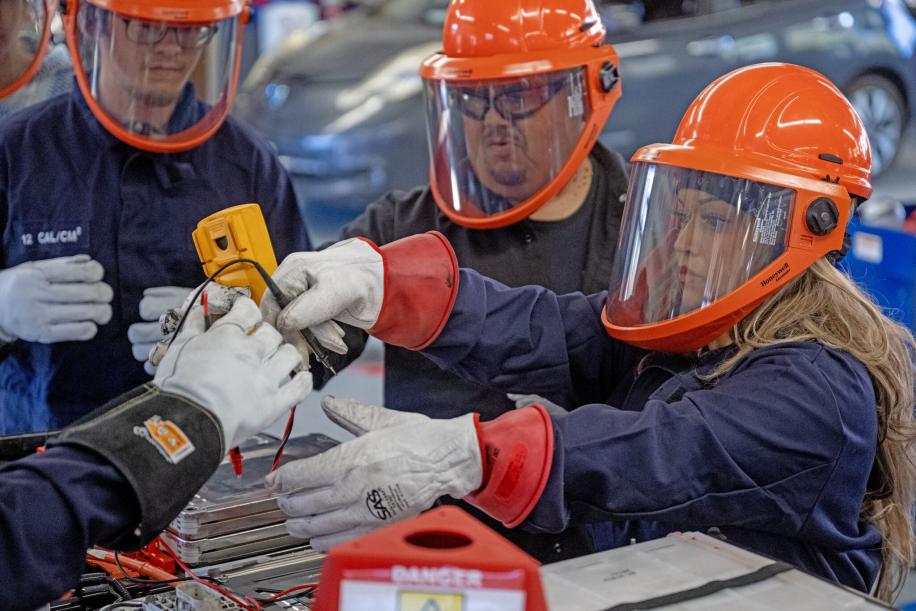
In Pueblo, classes of 10-12 automotive students now suit up in insulated personal protective equipment more akin to what’s in power plants or on power lines for their daily safety test ahead of their lab work.
Layers of gloves, coveralls, an insulating blanket, face shields, dielectric boots and insulated tools, all with a Class 0 rating to withstand 1,000 volts, are not only commonplace but mandatory in the electric and hybrid automotive field.
The chair of PCC’s automotive technology program, James Cordova, said that their hybrid and electric vehicle (EV) safety and operation coursework, which the college began offering in 2023, prepares students for a different type of work environment in a growing field.
“These batteries that we’re working on today are an excess of 360 volts. Very dangerous,” said Cordova, who has taught at the college for over 20 years. “It changes the way that you teach and you train because of the safety aspect of it.”\
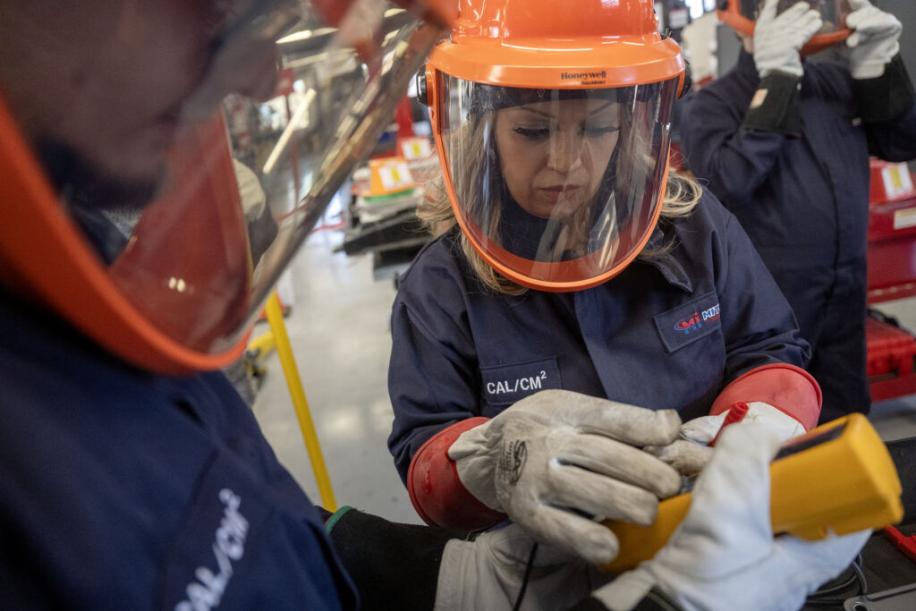
PCC currently offers the two-year automotive program that includes this coursework and a standard-class EV-focused certification option that can be completed in 16 weeks.
Along with prioritizing worker safety and equipment maintenance, he said the coursework prepares students for careers with a heavy focus on electronic diagnosis, controller-area networks and communications between different modules.
Technicians for both EV batteries and charging stations are among the high-demand job opportunities for students who complete the program.
The specialized coursework is the first of its kind in Colorado and among the first in the country. Cordova said that he and the school met with stakeholders, education leaders and community members to develop its content while state incentives, grant funding and donations got it off the ground.
“The workforce was speaking loud and clear that they need the additional support because these vehicles are here,” he said. “They’re not going anywhere, so I think we listened to that call.”
‘Most affordable option’:
Additionally, the state’s community colleges are already the most affordable public higher education option in Colorado. Pell Grants alone often cover full tuition and fees. Only about 10.6% of CCCS students — roughly 13,200 students — took out federal loans last year.
“Among those, the average loan was under $5,000. For our students,” (CCCS Public Information Officer Fiona) Lytle said, “borrowing is the exception — not the norm.”